

What is asynchronous learning: A practical guide for online courses

Table of Contents
Think of asynchronous learning like streaming a show on Netflix. You don't have to watch at a specific time. Instead, you access the content—lectures, assignments, and materials—entirely on your own schedule.
This flexibility allows people to fit learning into their busy lives, rather than rearranging their lives around a fixed class time.
Understanding Asynchronous Learning
Asynchronous learning separates education from a specific time or place. There is no need for everyone to be in the same room (or Zoom call) at the same time. Students can access course material whenever and wherever it works for them.
This model is the foundation of most modern online courses and paid communities, enabling creators to reach a global audience across different time zones.
The model is built on three core ideas:
- Flexibility and Freedom: Students can learn late at night, during a lunch break, or on a weekend. This is ideal for anyone balancing a career, family, or other commitments.
- Self-Paced Progress: Learners move at their own speed. They can spend extra time on difficult topics or move quickly through familiar material without waiting for others.
- On-Demand Access: All course materials—videos, readings, quizzes, and project instructions—are available 24/7.
Why It's So Effective
This model is efficient. Research shows online asynchronous training can take up to 60% less employee time than in-person training. Learners can pause, rewind, and re-watch content as needed, without the pressure of a live session. You can explore more online education statistics to see the full impact.
The key benefit is the shift in control from the instructor's schedule to the learner's needs. This student-centered approach makes learning more accessible and gives learners a stronger sense of ownership over their progress.
Comparing Asynchronous and Synchronous Learning Models
To understand asynchronous learning, it helps to compare it with its counterpart: synchronous learning.
Synchronous learning is like a live concert—everyone must be present at the same time to experience it together. Asynchronous learning is like a recorded album—you can listen whenever and wherever you want, at your own pace.
The main difference is scheduling. Synchronous learning happens in real-time through live lectures or group video calls. It’s effective for immediate interaction that mimics a traditional classroom.
Asynchronous learning removes the real-time constraint. Students work through pre-recorded videos, readings, and assignments on their own schedule. Communication occurs through forums or project feedback, allowing time for more thoughtful responses.
Asynchronous vs. Synchronous Learning at a Glance
This table breaks down the key differences to help you choose the right approach for your course.
| Feature | Asynchronous Learning | Synchronous Learning |
|---|---|---|
| Schedule | Flexible, on-demand | Fixed, real-time schedule |
| Pace | Student-led, self-paced | Instructor-led, group-paced |
| Interaction | Delayed (forums, comments) | Immediate (live chat, calls) |
| Best For | Scalable, evergreen courses | Cohorts, immediate feedback |
The goal is not to pick a "winner" but to choose the right tool for the job. Many successful online courses use a hybrid model, combining asynchronous content for core lessons with optional synchronous sessions for live support and community building.
This visual highlights the core pillars of the asynchronous model: flexibility, self-pacing, and learning from anywhere.
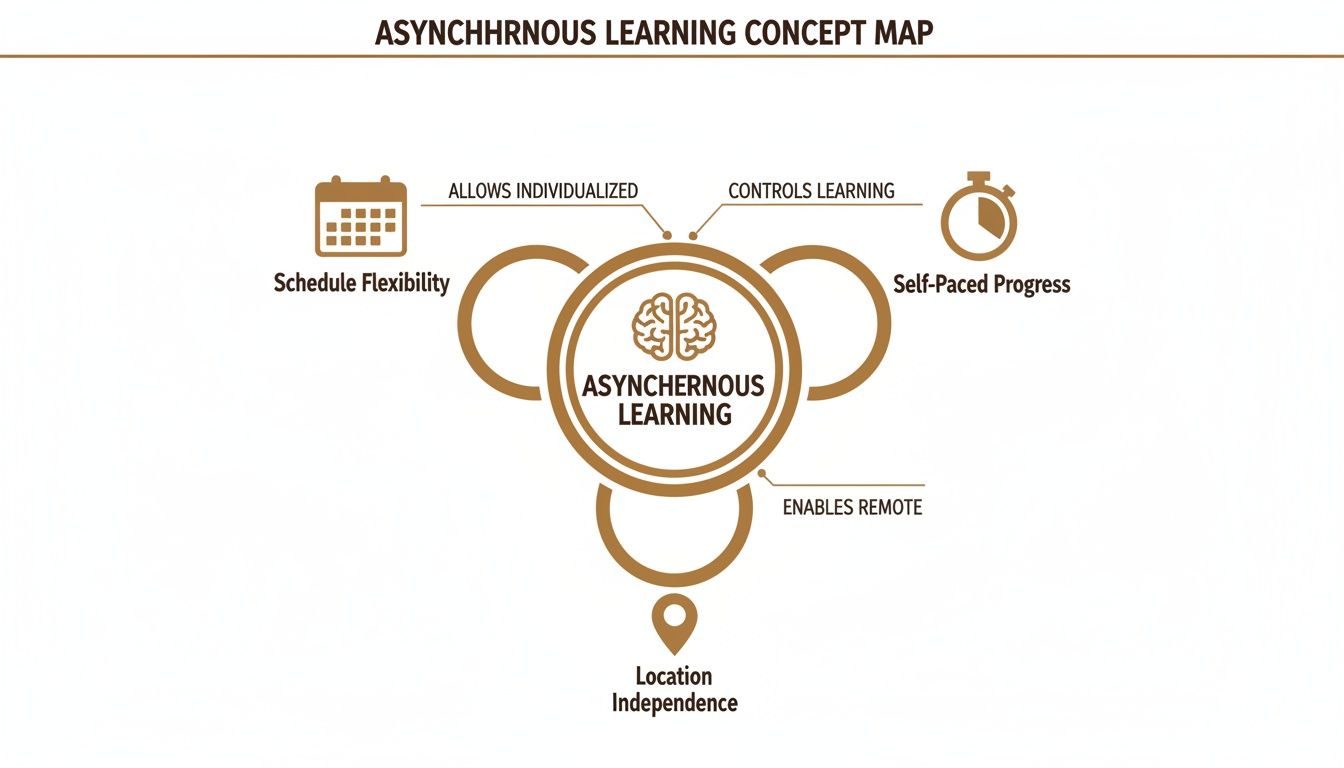
This model puts the student in control, allowing them to fit your course into their life. To learn more, you can explore other learning models on our blog.
So, what makes asynchronous learning so beneficial?
The primary benefit for learners is flexibility. A working parent can take a course after their children are asleep. An employee can watch a lesson on their lunch break. If a topic is difficult, they can re-watch it as needed without slowing down a class. This self-paced style puts them in control of their education, leading to deeper understanding.
What's In It for Course Creators?
For creators, the advantages are scalability and durability. With an asynchronous model, you create a resource once, and it can serve an unlimited number of people indefinitely.
- Global Reach: Time zones become irrelevant. Your course is available 24/7, allowing you to enroll students from London to Los Angeles without scheduling early-morning calls.
- Sustainable Growth: You build evergreen content that generates value long after publication. A business coach can create a flagship program that enrolls new students daily, creating a consistent income stream.
Asynchronous learning transforms your course from a one-time event into a scalable asset. This allows you to serve more people, build a more sustainable business, and free yourself from being present for every lesson.
This approach makes learning more accessible for students and creates a smarter, more efficient business for you.
Solving the Common Challenges of Asynchronous Courses
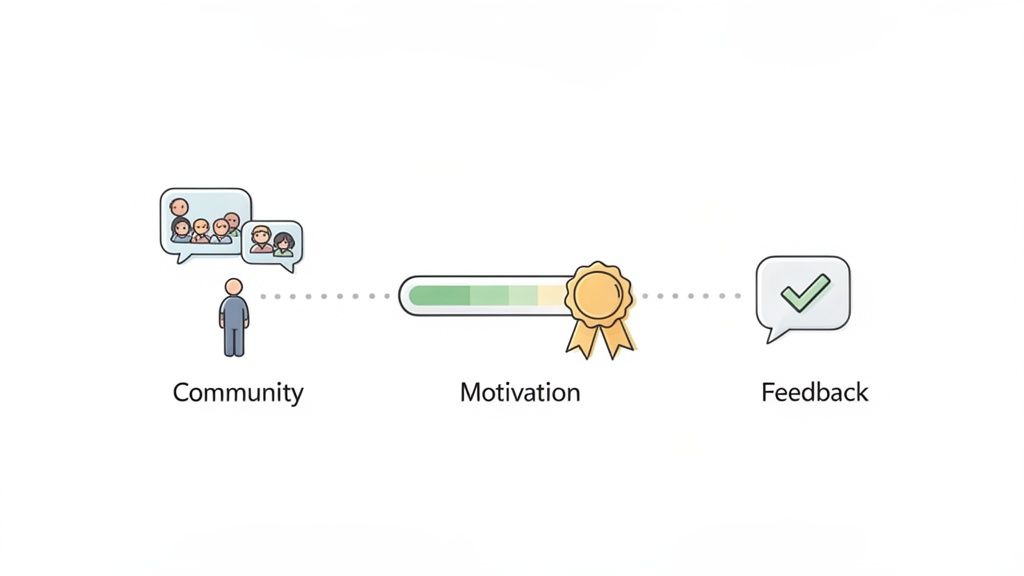
The freedom of asynchronous learning is its main attraction, but it can also present challenges. Without scheduled meetings, students may feel isolated, struggle with motivation, or lack necessary feedback.
With careful planning, you can overcome these issues by intentionally building a supportive and engaging environment.
Fostering Community and Connection
Student isolation is a primary concern. When learners feel alone, they are more likely to disengage. To prevent this, actively cultivate a community where they can connect with you and each other.
- Actionable Step: Create a dedicated "#introductions" channel where new students can share their goals. This immediately helps them find others with similar interests.
- Actionable Step: Set up a weekly "#wins" thread where students post their progress. For example, a student in a coding course could share a small piece of code they wrote.
Many platforms are designed for community-building. Our guide on the best learning management systems for small business can help you find tools that facilitate this.
Maintaining Motivation and Providing Feedback
Without firm deadlines, procrastination can become an issue. The key to keeping students engaged is to make their progress visible, rewarding, and supported.
An asynchronous course should not feel like a solo mission. By integrating gamification and clear feedback loops, you create a structure that encourages consistent effort and celebrates student progress.
- Actionable Step: Use progress bars that show completion percentages for each module.
- Actionable Step: Host a monthly "Ask Me Anything" (AMA) thread where students can submit questions for you to answer in a pre-recorded video. This provides valuable feedback without requiring a live session.
This is a significant trend in education. Projections indicate that by 2027, 57 million learners worldwide will be learning asynchronously. You can find more information on the future of online learning trends and how to prepare.
How to Design a Truly Engaging Asynchronous Course
Anyone can record videos and call it a course. Creating a great asynchronous course—one that keeps students engaged—requires designing an experience that combines quality content with connection and a clear path forward.
Success depends not only on what you teach but how you deliver it. People learn in different ways; some prefer videos, others reading, and many learn by doing. A well-designed course accommodates these various styles.
Step 1: Structure Your Content for Clarity and Flow
Your course structure is its foundation. A disorganized course is overwhelming, while a well-designed one guides learners smoothly. Break down complex topics into small, manageable pieces.
Here is a practical content structure to follow:
- Bite-Sized Video Lessons (5-10 minutes): Keep videos short and focused on one core concept. This makes them easy to digest and revisit. For example, a marketing course might have one video on "Writing Headlines" and another on "Choosing Images."
- Actionable Resources: Provide tools like downloadable worksheets, checklists, or templates that help students apply what they've learned immediately.
- Quick Quizzes (3-5 questions): Use simple, low-stakes quizzes at the end of each module to reinforce key concepts and provide a quick sense of accomplishment.
This mix of formats creates a richer learning environment. For more guidance, see our article on designing learning experiences.
Step 2: Build a Community People Actually Want to Join
Self-paced learning can be isolating. Community is the element that prevents students from dropping out. It provides the support and accountability needed to stay motivated.
The best asynchronous courses feel less like a solo trip to the library and more like joining a supportive club. Community transforms passive content consumption into an active, shared journey.
- Actionable Step: Create topic-specific channels (e.g., "#module-1-questions") so students can get help exactly where they need it.
- Actionable Step: Encourage peer feedback by creating assignments where students review each other’s work, such as critiquing a blog post or a design mockup.
Step 3: Weave in Motivation and Smart Monetization
To keep learners progressing, make the experience rewarding. Simple gamification can be highly effective. Award points for completing lessons, give badges for milestones, or display a progress bar. These visual cues provide a satisfying sense of accomplishment.
Finally, consider how you will offer your course. You can sell it as a one-time purchase for lifetime access or offer it as a recurring subscription that includes ongoing community access and new content. This flexibility helps you build a business model that suits both you and your students.
Still Have Questions? Let's Clear Things Up
Here are answers to some of the most common questions about asynchronous learning.
Is Asynchronous Learning Really as Good as In-Person Classes?
Yes, and sometimes it is better. Success depends on the course design. When you include opportunities for interaction, such as discussion forums for peer feedback or collaborative projects, learners can process information more deeply. The self-paced nature often leads to better retention because students can master a concept before moving on.
Will This Work for My Specific Topic?
This model is well-suited for a wide range of subjects, particularly those focused on knowledge transfer, like digital marketing, coding fundamentals, or financial planning.
For hands-on skills like learning a musical instrument, a blended approach works best. You can deliver core theory through asynchronous lessons and offer optional live sessions for practical feedback and hands-on practice.
How Do I Keep My Students from Feeling Alone?
The solution is community. Building an interactive community is the most effective way to prevent isolation. It turns a solo activity into a shared experience.
The most effective way to combat isolation is by designing your course around connection. Fostering a sense of shared purpose and belonging makes the learning journey more enjoyable and significantly boosts completion rates.
- Actionable Step: Create a dedicated space for introductions where you prompt students to share what they hope to achieve with the course.
- Actionable Step: Start weekly discussion prompts related to the course material to encourage interaction.
Ready to turn your expertise into a thriving asynchronous course and community? Kampunity provides all the tools you need—from course creation and community chat to gamification and monetization—in one simple platform. Build your learning community with Kampunity today!