

12 Engaging Discussion Group Topics to Spark Amazing Conversations in 2025

Table of Contents
- 1. Current Events and News Analysis
- 2. Book Clubs and Literature Discussions
- 3. Professional Development and Career Growth
- 4. Health, Wellness, and Mental Health Support Groups
- 5. Hobby and Special Interest Clubs
- 6. Parenting and Family Discussion Groups
- 7. Educational and Learning Discussion Groups
- 8. Social Activism and Advocacy Groups
- 9. Personal Finance and Money Management Discussions
- 10. Technology and Innovation Discussion Groups
- 11. Spiritual and Philosophical Discussion Groups
- 12. Arts, Culture, and Creative Expression Groups
- Comparison of 12 Discussion Group Topics
- Putting It All Together: Your Action Plan for Better Discussions
A thriving community is built on meaningful conversation. But finding the right discussion group topics to spark those conversations can be a challenge. Generic prompts lead to generic responses, and the initial excitement of a new group can fade, leaving a quiet feed of passive members. When participation dwindles, so does the value your community provides.
This guide provides a blueprint for breaking that cycle. We will move beyond basic "icebreaker" questions and explore a collection of actionable topics designed to generate real dialogue. You'll find 12 distinct categories packed with ready-to-use prompts tailored for different community types—from professional mastermind groups to hobby clubs and support networks.
This isn't just a list of ideas. It's a practical playbook for facilitating these conversations effectively. We'll show you how to use tools like polls, threads, and live events to turn a simple prompt into a dynamic, engaging experience. Let's explore the discussion group topics that will ignite your community, foster deeper connections, and turn passive observers into active contributors.
1. Current Events and News Analysis
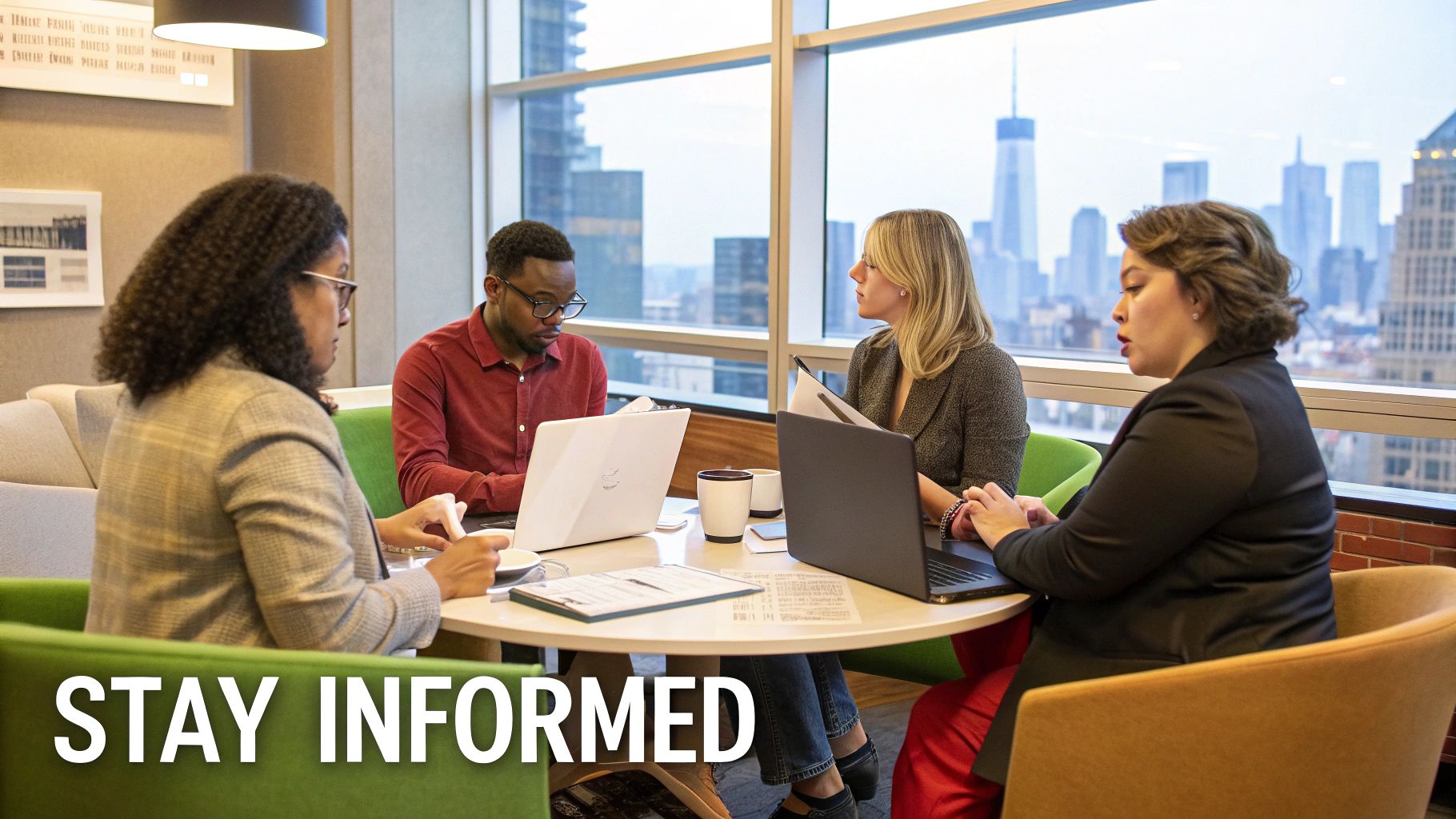
Diving into current events is a powerful way to foster critical thinking and keep your community engaged. This type of group focuses on analyzing recent news, political shifts, and global trends. Participants dissect information, examine various perspectives, and explore the real-world implications of major events. It's a format that remains perpetually relevant, making it one of the most sustainable discussion group topics.
This approach is effective for professional networks, social science courses, or any community aimed at developing media literacy. By facilitating these conversations, you help members build valuable skills in analysis and respectful debate.
How to Implement This Topic
To get started, establish a clear framework. You can use your community platform’s features to create a dedicated space for these conversations.
- Create a #news-analysis channel: Dedicate a specific channel where members can share and discuss articles.
- Use polls for topic selection: Let members vote on which news story to focus on for the week's live discussion event.
- Leverage discussion threads: For each article posted, encourage members to use threads to keep conversations organized and easy to follow.
Actionable Tips for Success
Key Insight: The goal isn't to reach a consensus, but to deepen understanding. A successful news discussion is one where participants leave with a more nuanced view than when they started.
- Establish Clear Ground Rules: Before the first discussion, post rules for civility. Emphasize attacking ideas, not people.
- Share Credible Sources: Encourage members to post links from reputable, diverse sources to avoid echo chambers.
- Appoint Rotating Moderators: Ask different members to lead each session. This builds leadership skills and ensures a variety of facilitation styles.
2. Book Clubs and Literature Discussions
A book club is a classic way to foster deep connection and intellectual exploration. This discussion group topic centers on collectively reading and analyzing literature, exploring everything from character development and narrative themes to writing style and cultural impact. Members experience a book together, sharing personal interpretations and building a shared intellectual journey.
This format is ideal for interest-based communities, alumni networks, or any group that values storytelling. By facilitating literary discussions, you create a space for members to practice empathy, expand their perspectives, and connect on a personal level.
How to Implement This Topic
A structured approach is key to a successful book club. Use your platform’s tools to organize the reading and discussion process.
- Create a #book-club channel: Use a dedicated channel for all announcements, reading check-ins, and asynchronous discussions.
- Use polls for book selection: Empower members by letting them vote on the next book from a curated list of options.
- Leverage discussion threads: Start a new thread for each chapter or major theme to keep conversations focused and prevent spoilers.
Actionable Tips for Success
Key Insight: A great book club discussion isn't about finding the "right" interpretation. It's about exploring the many ways a story can resonate with different people.
- Set a Realistic Reading Schedule: Break the book into manageable sections with clear deadlines to ensure everyone can keep up.
- Provide Discussion Prompts: Prepare thoughtful, open-ended questions beforehand to guide the conversation beyond simple plot summaries.
- Rotate Book Selection: Allow different members or groups to nominate books. This ensures a variety of genres and perspectives are represented.
3. Professional Development and Career Growth
Focusing on professional development turns a discussion group into a peer-mentorship engine. This topic centers on sharing career advancement strategies, navigating industry trends, developing skills, and overcoming workplace challenges. It's a collaborative space where members at different career stages can exchange insights, offer support, and hold each other accountable for professional goals.
This format is ideal for industry associations, alumni networks, or any community dedicated to career advancement. By facilitating these discussions, you empower members to learn from each other's experiences, build connections, and gain the confidence to take the next step in their careers.
How to Implement This Topic
Structure your community to encourage both structured and organic conversations. Use your platform’s features to create dedicated spaces for specific career-focused activities.
- Create a #career-wins channel: Encourage members to share recent accomplishments, promotions, or successful projects.
- Use polls for skill workshops: Let the community vote on which soft skill (e.g., negotiation, public speaking) they want to focus on for the next live event.
- Leverage discussion threads for Q&A: When a member posts a career-related question, use threads to organize advice from others.
Actionable Tips for Success
Key Insight: The most valuable career discussions happen in an environment of high trust and psychological safety. Confidentiality is the foundation of meaningful peer mentorship.
- Establish a Confidentiality Agreement: Have members agree to a simple non-disclosure guideline to encourage open sharing about sensitive workplace situations.
- Mix Career Levels: Actively recruit members from various career stages, from interns to senior leaders, to facilitate rich mentorship opportunities.
- Invite Guest Speakers: Bring in industry experts or hiring managers to host an AMA (Ask Me Anything) session about specific career paths or hiring trends.
For more resources on building a professionally-focused community, you can explore groups dedicated to Professional Development and Career Growth.
4. Health, Wellness, and Mental Health Support Groups
Creating a space for health and wellness discussions can be profoundly impactful, offering members a safe environment to share experiences and find solidarity. These groups focus on topics like mental wellness, fitness, nutrition, and managing chronic conditions. The goal is to build a supportive network where members exchange information, share personal journeys, and encourage one another.

This format is ideal for communities centered on personal growth, patient advocacy, or corporate wellness programs. Facilitating these sensitive conversations provides a vital resource that can lead to tangible improvements in members' well-being. Explore similar communities and find more resources by learning more about Health, Wellness, and Mental Health Support Groups on kampunity.com.
How to Implement This Topic
A structured and secure environment is crucial for these discussions. Use your community platform’s features to ensure privacy and focus.
- Create a private #wellness-support channel: Make the channel invite-only to protect member confidentiality and create a safe space.
- Host themed weekly check-ins: Use events for structured discussions on specific topics like "Managing Stress" or "Nutrition Tips."
- Utilize anonymous polls: Gather feedback or gauge interest in sensitive topics without requiring members to identify themselves publicly.
Actionable Tips for Success
Key Insight: Safety is paramount. A successful support group is built on a foundation of trust, confidentiality, and clear boundaries that make vulnerability possible.
- Establish Strict Confidentiality Rules: Make it clear from the outset that everything shared in the group stays in the group. This is non-negotiable.
- Provide Crisis Resources: Prominently display links and contact information for professional help, like hotlines or mental health services, in the channel description.
- Involve Trained Facilitators: Partner with a licensed therapist or certified coach to moderate discussions, especially those on sensitive mental health topics.
5. Hobby and Special Interest Clubs
Centering a discussion group around a shared hobby creates an instant bond and a wellspring of natural conversation. These groups focus on passions like gaming, gardening, photography, or cooking, allowing members to exchange techniques, share recommendations, and celebrate their collective interest. This makes it one of the most engaging and self-sustaining discussion group topics available.
This approach is perfect for building relaxed, social communities where the primary goal is connection and shared enjoyment. It works well for local communities, brand-sponsored groups, or any platform aiming to foster genuine friendships among members with similar leisure pursuits.
How to Implement This Topic
To bring a hobby group to life, create dedicated spaces for members to share and learn. Your community platform can be structured to support these activities.
- Create specific hobby channels: Set up channels like
#gardening-tipsor#gaming-lobbyto focus conversations. - Host "Show and Tell" events: Schedule regular live events where members can showcase their recent projects, like a new recipe they tried or a photograph they took.
- Use threads for Q&A: Encourage members to ask questions in a main channel and use threads for detailed answers to keep the main feed clean.
Actionable Tips for Success
Key Insight: A thriving hobby group celebrates participation at all levels. Making beginners feel just as valued as experts is crucial for long-term growth and a positive atmosphere.
- Welcome Beginners Explicitly: Create a "start-here" guide or pinned post with beginner-friendly resources to reduce intimidation.
- Celebrate Member Achievements: Create a dedicated space or a weekly roundup post to highlight member projects and milestones.
- Organize Hands-On Meetups: If possible, facilitate virtual or in-person workshops where members can practice their skills together, like a remote co-cooking session.
6. Parenting and Family Discussion Groups
Creating a space for parents and caregivers to connect provides immense value, offering mutual support and shared wisdom. These discussion groups tackle everything from child-rearing strategies and behavior management to educational choices and family transitions. Participants exchange practical advice, share experiences, and find solidarity in the common challenges and triumphs of raising a family.
This format is ideal for family-focused brands, educational institutions, or any community aimed at supporting caregivers. By facilitating these conversations, you build a loyal, engaged group where members feel seen, heard, and understood.
How to Implement This Topic
Structure your community to meet the specific needs of parents. Using your platform’s features can create a safe and organized space.
- Create channels by age/stage: Set up dedicated channels like
#newborn-parents,#toddler-talk, or#teen-challengesso members can find relevant conversations. - Host expert Q&A events: Schedule live sessions with pediatricians, child psychologists, or educational consultants.
- Use threads for specific issues: Encourage members to start threads for niche topics like "potty training tips" or "navigating screen time" to keep advice focused.
Actionable Tips for Success
Key Insight: A successful parenting discussion group prioritizes non-judgmental support over prescriptive advice. The goal is to empower parents by sharing a wide range of experiences and resources.
- Establish a "No Judgment" Zone: Your community guidelines must explicitly state a commitment to supportive, empathetic, and non-judgmental dialogue.
- Share Evidence-Based Resources: Supplement personal anecdotes by regularly sharing articles and studies from reputable sources like the American Academy of Pediatrics.
- Celebrate the Wins: Create a dedicated space or weekly thread for members to share positive moments and parenting victories, no matter how small.
7. Educational and Learning Discussion Groups
Transforming passive learning into an active, collaborative experience is the core of an educational discussion group. This format centers on academic subjects, skill acquisition, or language learning, where members work together to deepen their understanding. Participants engage in peer-to-peer teaching, problem-solving, and collaborative exploration of complex concepts. This reinforces learning through application.
This approach is invaluable for university study groups, online course cohorts, or any community built around mastering a new skill. By facilitating these focused learning discussions, you empower members to overcome learning plateaus, build confidence, and achieve their educational goals.
How to Implement This Topic
To build a successful learning hub, provide structure and resources that guide the collaborative process. Use your community platform to create an environment conducive to focused study.
- Create dedicated #subject-channels: Organize discussions by topic, module, or skill level to keep conversations focused and relevant.
- Use events for live study sessions: Schedule regular live video calls for real-time problem-solving, presentations, or group review sessions.
- Leverage threads for specific questions: Encourage members to ask questions in dedicated threads so answers are easy to find and don't get lost in the main channel.
Actionable Tips for Success
Key Insight: The most effective learning groups are those where every member has an opportunity to both teach and learn. Encourage a culture of mutual support over competition.
- Set Clear Learning Objectives: Before each session, define what the group aims to understand or accomplish. This keeps the discussion on track.
- Prepare and Share Materials: Distribute relevant readings, problem sets, or discussion prompts ahead of time so members can come prepared.
- Rotate Topic Leadership: Assign a different member to lead the discussion each week. This builds accountability and deepens their own understanding.
8. Social Activism and Advocacy Groups
Discussion groups centered on social activism and advocacy are hubs for change. These communities focus on critical issues like social justice, environmentalism, human rights, and local organizing. Members don't just talk about problems; they strategize, organize, and mobilize to create meaningful social change, making this one of the most action-oriented discussion group topics.
This model is ideal for non-profits, student organizations, and grassroots movements. By creating a space for informed discussion, you can channel collective passion into coordinated action, helping members feel empowered and connected to a larger cause.
How to Implement This Topic
To mobilize your community effectively, structure your platform for both discussion and action. Use your community tools to create a dedicated, organized space.
- Create dedicated channels: Set up distinct channels like
#climate-action,#human-rights-news, and#local-organizingto focus conversations. - Use events for planning: Schedule live events to plan campaigns, host guest speakers, or coordinate local meetups.
- Leverage threads for specific tasks: Use threads to delegate tasks for a campaign, such as social media outreach, research, or content creation.
Actionable Tips for Success
Key Insight: The most effective advocacy groups balance discussion with decisive action. Ensure every conversation has a potential next step, whether it's signing a petition or organizing an event.
- Connect Discussion to Actionable Steps: End each meeting by defining clear, achievable actions members can take. Use polls to decide on the next collective action.
- Prevent Burnout with Self-Care: Create a dedicated space or recurring event focused on mental health and self-care to prevent activist burnout.
- Celebrate Small Wins: Regularly highlight and celebrate milestones, no matter how small, to maintain momentum and morale.
9. Personal Finance and Money Management Discussions
Tackling personal finance can be intimidating, but a community setting transforms it into a collaborative journey. This type of discussion group focuses on everything from budgeting and debt management to investing and retirement planning. Members share practical strategies, celebrate financial wins, and troubleshoot challenges together, creating a supportive environment for improving financial literacy.
This format is ideal for professional networks, adult learning communities, and groups dedicated to personal development. By facilitating these conversations, you empower members to take control of their financial futures, a skill that benefits every aspect of their lives.
How to Implement This Topic
A structured approach ensures conversations are productive and safe. Use your community platform’s features to create a dedicated and confidential space.
- Create a #money-talk channel: Designate a private channel where members can ask questions and share insights without judgment.
- Host themed events: Organize monthly live sessions on specific topics like "Beginner Investing" or "Debt Payoff Strategies."
- Use threads for case studies: Encourage members to share specific financial scenarios (anonymously if preferred) and use threads for community-sourced advice.
Actionable Tips for Success
Key Insight: Financial discussions thrive on trust. Normalizing both successes and struggles is crucial for creating a space where members feel comfortable opening up.
- Establish a Disclaimer: Start with a clear disclaimer that discussions are for educational purposes and do not constitute professional financial advice.
- Invite Guest Experts: Bring in a certified financial planner or accountant for a Q&A session to provide expert, credible information.
- Create Accountability Pods: Encourage small groups of 3-4 members to form "accountability pods" to support each other in reaching specific goals.
10. Technology and Innovation Discussion Groups
Exploring emerging technologies, from artificial intelligence to blockchain, provides a forward-looking and highly engaging basis for a discussion group. This format centers on dissecting digital trends, analyzing new software, and debating the societal impact of innovation. Members discuss applications, ethical considerations, and potential to solve real-world problems. This focus on the cutting edge is compelling for developers, entrepreneurs, and anyone curious about the future.
This approach is ideal for professional networks, coding bootcamps, or startup mastermind groups. By creating a space to explore these advancements, you empower members to stay current, share practical knowledge, and spark ideas for collaborative projects.
How to Implement This Topic
Structure your community to encourage both learning and hands-on exploration. Use your platform’s features to facilitate dynamic interaction.
- Create a #emerging-tech channel: Use a dedicated channel for sharing news, articles, and whitepapers on the latest innovations.
- Host "Demo Day" events: Schedule regular live events where members can demonstrate a new tool, app, or piece of code they are working on.
- Leverage polls to guide content: Ask members to vote on which tech trend they want to explore in the next deep-dive session.
Actionable Tips for Success
Key Insight: The best technology discussions blend theory with practice. Move beyond just talking about new tools by creating opportunities for members to experiment with them together.
- Invite Guest Experts: Bring in industry professionals, developers, or startup founders to share their firsthand experience and answer member questions.
- Curate a Weekly Tech Digest: Share a roundup of the most important tech news and articles to provide a consistent starting point for conversation.
- Facilitate Collaborative Projects: Encourage members to form small groups to build a simple app, analyze a dataset, or experiment with a new API.
11. Spiritual and Philosophical Discussion Groups
Exploring life's bigger questions can create profound connections within a community. These discussion groups delve into topics like ethics, meaning, spirituality, and foundational philosophical concepts. Members engage in respectful dialogue, sharing personal beliefs and analyzing complex ideas without the pressure to convert or conform. This format fosters introspection, empathy, and a deeper understanding of diverse worldviews.
This approach is effective for mindfulness communities, interfaith councils, or any group dedicated to personal growth. By creating a safe space for these conversations, you empower members to explore their own beliefs while learning from others in a supportive environment.
How to Implement This Topic
A structured and respectful environment is key. Use your platform tools to facilitate thoughtful and organized exchanges on these sensitive subjects.
- Create a #philosophy-circle channel: Designate a specific channel for members to pose questions and share resources.
- Use polls for text selection: Allow the community to vote on which foundational text or philosophical reading to cover next.
- Leverage events for themed talks: Schedule live events focusing on a single question, such as "What is a meaningful life?"
Actionable Tips for Success
Key Insight: The primary goal is exploration, not agreement. A successful philosophical discussion is one where members feel safe to be vulnerable and leave with more questions than answers.
- Establish a Respect Charter: Co-create and pin guidelines that explicitly forbid proselytizing and demand respect for all beliefs, including non-belief.
- Start with Foundational Texts: Begin by reading and discussing a shared text from a philosopher or spiritual leader. This gives the conversation a common starting point.
- Focus on Questions, Not Answers: Frame discussions around open-ended questions. Instead of asking "Is free will real?" ask "What are the implications of believing in free will?"
12. Arts, Culture, and Creative Expression Groups
Exploring arts and culture offers a rich way to connect members and stimulate imaginative conversations. These discussion group topics focus on analyzing creative works like films, music, or paintings, and can also provide a space for members to share their own creative projects. This format taps into personal tastes and emotional responses, fostering a community built on shared appreciation and constructive feedback.

This approach is perfect for interest-based communities, design cohorts, or any group that values creative thinking. Facilitating these discussions helps members develop a deeper appreciation for the arts and build confidence in expressing their unique perspectives. Find inspiration for your community by exploring different Arts, Culture, and Creative Expression Groups.
How to Implement This Topic
Structure your community to encourage both analysis and participation. Use your platform’s features to create a vibrant and organized creative hub.
- Create dedicated channels: Set up channels like
#film-club,#book-of-the-month, or#creative-showcase. - Host themed events: Schedule a monthly "Virtual Gallery Tour" or a "Poetry Open Mic" where members can share and discuss works.
- Use threads for critiques: When a member shares a project, encourage structured feedback within a dedicated thread to keep comments focused.
Actionable Tips for Success
Key Insight: The focus should be on interpretation and personal connection, not on declaring a piece "good" or "bad." Encourage members to explain why a work resonates with them to spark deeper conversations.
- Provide Diverse Exposure: Intentionally select works from different cultures, time periods, and underrepresented artists to broaden horizons.
- Establish Critique Frameworks: Introduce a simple framework for giving feedback (e.g., "What I liked," "What I found interesting") to ensure critiques are constructive.
- Welcome All Skill Levels: Emphasize that the group is for appreciation and learning, not just for expert artists. This creates a safe space for beginners to share.
Comparison of 12 Discussion Group Topics
| Topic | 🔄 Implementation Complexity | ⚡ Resource Requirements (time / cost / tools) | ⭐ Expected Outcomes / 📊 Impact | Ideal Use Cases | 💡 Key Advantages / Tips |
|---|---|---|---|---|---|
| Current Events and News Analysis | Moderate — needs active moderation & fact‑checking | Moderate time; low cost; internet/news access | ⭐⭐⭐⭐ — improves media literacy & timely awareness; impact fades quickly 📊 | Community centers; universities; online platforms; corporate briefings | 💡 Set civility rules; rotate leaders |
| Book Clubs and Literature Discussions | Low–Moderate — scheduling + reading coordination | Moderate time commitment; low cost; access to books | ⭐⭐⭐⭐ — deepens comprehension & community bonds 📊 | Libraries; bookstores; schools; online communities | 💡 Use reading guides; realistic timelines |
| Professional Development and Career Growth | Moderate–High — needs industry input & confidentiality | High time; possible fees; guest speakers/tools | ⭐⭐⭐⭐ — accelerates growth and networking 📊 | Corporates; associations; online professional platforms | 💡 Use confidentiality agreements; invite speakers |
| Health, Wellness, and Mental Health Support Groups | High — requires trained facilitators & safety protocols | High time; potential professional fees; safe space | ⭐⭐⭐⭐⭐ — strong emotional support & reduced isolation 📊 | Hospitals; community centers; online support platforms | 💡 Partner with professionals; crisis resources available |
| Hobby and Special Interest Clubs | Low — informal structure; project coordination | Low–Moderate cost (equipment); time for meetups | ⭐⭐⭐⭐ — high engagement and skill development 📊 | Community centers; parks; online hobby groups | 💡 Welcome beginners; host hands‑on meetups |
| Parenting and Family Discussion Groups | Moderate — organize by age/stage; expert input helpful | Moderate time; occasional expert fees; child‑stage segmentation | ⭐⭐⭐⭐ — reduces stress, shares strategies 📊 | Schools; libraries; healthcare facilities; community centers | 💡 Segment by child age; invite pediatric experts |
| Educational and Learning Discussion Groups | Moderate–High — requires curriculum planning | Moderate time; materials preparation; possible tech for recording | ⭐⭐⭐⭐⭐ — improves retention and collaborative learning 📊 | Schools; universities; community education; online courses | 💡 Set clear objectives; record sessions |
| Social Activism and Advocacy Groups | High — action planning, coordination & risk management | High time commitment; organizing resources; campaign costs | ⭐⭐⭐⭐ — potential for meaningful change; risk of burnout 📊 | Community centers; universities; online activist platforms | 💡 Tie discussions to action; prevent burnout |
| Personal Finance and Money Management Discussions | Moderate — need expert vetting to avoid misinformation | Moderate time; occasional professional advisors; data/tools | ⭐⭐⭐⭐ — boosts financial literacy and accountability 📊 | Libraries; workplaces; online forums; community centers | 💡 Invite certified advisors; normalize diverse situations |
| Technology and Innovation Discussion Groups | Moderate–High — needs up‑to‑date content & demos | Moderate–High time; tools/demos; expert speakers | ⭐⭐⭐⭐ — keeps members current; fosters innovation 📊 | Tech companies; universities; startup spaces; online communities | 💡 Include hands‑on demos; invite industry speakers |
| Spiritual and Philosophical Discussion Groups | Moderate — facilitation for respectful dialogue | Low–Moderate time; safe spaces; diverse materials | ⭐⭐⭐⭐ — deepens reflection & mutual respect 📊 | Religious institutions; universities; community centers | 💡 Establish respectful dialogue guidelines |
| Arts, Culture, and Creative Expression Groups | Moderate — critique frameworks + access to venues | Moderate time; materials/venue costs; exhibition space | ⭐⭐⭐⭐ — encourages creativity and constructive feedback 📊 | Arts organizations; cultural centers; community spaces | 💡 Use structured critique; welcome all levels |
Putting It All Together: Your Action Plan for Better Discussions
You now have a toolkit filled with a wide array of discussion group topics to ignite engagement. From in-depth literary analysis in a book club to strategic career planning in a professional network, the potential for connection is limitless. But a great topic is only the starting point. The true art lies in execution, facilitation, and the environment you cultivate.
The difference between a conversation that fizzles out and one that flourishes lies in intentional design. It's about moving beyond simply posting a question and hoping for the best. Community-building involves creating a structured framework where members feel safe, seen, and motivated to contribute.
From Topics to Thriving Conversations: Key Takeaways
Mastering these core principles will transform your group discussions from passive information exchanges into dynamic, value-driven experiences.
- Context is King: The most successful discussions are relevant to your community's core purpose. Align your chosen discussion group topics with your members' shared goals and interests.
- Structure Creates Freedom: A well-chosen format provides the guardrails that allow conversations to thrive. A clear container gives members the confidence to participate fully.
- Facilitation is a Superpower: A skilled facilitator doesn't just ask questions; they guide, moderate, and empower. Your role is to ensure everyone has a voice and steer conversations back on track.
- Technology is Your Ally: Use community platform tools effectively. Use polls to gauge interest, create dedicated channels to keep conversations focused, and leverage threaded replies to organize complex discussions.
Your Immediate Action Plan
Feeling inspired? Here are your next steps to foster better discussions today:
- Review Your Community's Purpose: Before picking a topic, revisit your community's mission. What value do you promise members? Let this be your guide.
- Audit Your Current Discussions: Look at your past three discussion prompts. Which ones generated the most engagement? Which fell flat? Analyze why.
- Select and Pilot One New Topic: Choose one topic from this article that aligns with your audience but that you haven't tried before.
- Map Out the Engagement Flow: For your pilot topic, decide which tools you'll use. Will you start with a poll? Create a dedicated thread? Will it culminate in a live Q&A event? Document a simple plan.
- Gather Feedback: After the discussion, ask your members what they thought. A simple poll asking, "How valuable was this discussion?" can provide invaluable insights for your next one.
Ultimately, building a vibrant community is about creating a virtuous cycle of engagement. Great discussions lead to stronger connections, which encourages more members to participate. By thoughtfully selecting your topics and intentionally facilitating the interaction, you are weaving the fabric of a community that members will value, trust, and return to again and again.
Ready to move beyond basic forums and build a truly dynamic learning environment? Kampunity provides the all-in-one platform to seamlessly manage your courses, community, and events, allowing you to implement these powerful discussion strategies with ease. Create dedicated channels, run engaging polls, and host live sessions all in one place by visiting Kampunity to see how it can transform your community.