

How to Sell With Confidence: A Practical Guide for Creators


Table of Contents
Selling with confidence starts with one simple belief: your course or membership is the solution to someone's real problem. This isn't about memorizing scripts or using pushy tactics. It's a mindset shift. You stop asking for a sale and start offering a transformation.
That internal conviction is the foundation for every successful sales conversation you will ever have.
Build an Unshakeable Sales Mindset

True confidence isn't about being extroverted or never feeling fear. It's about being accountable for the result you promise. To get there, stop thinking of yourself as a "salesperson." Start seeing yourself as a guide who helps people get from Point A (their current frustration) to Point B (their desired success).
When you internalize this, the dynamic flips. You're no longer trying to get someone to buy something; you're guiding them toward an outcome they desperately want. This is the ultimate antidote to imposter syndrome because it grounds your work in their success, not your self-doubt.
From Imposter to Authority: A 2-Step Action Plan
Imposter syndrome makes it all about you. To defeat it, make it all about your student's success story. Get crystal clear on the "before" and "after" state your offer creates.
- Define the "Before": Grab a piece of paper and write down the specific, nagging problems your ideal student faces. What frustrations keep them stuck? For example, a "before" state for a social media course might be: “Posting content daily but getting zero engagement or leads.”
- Define the "After": Now, describe their new reality after completing your program. What new skills will they have? What doors will open? For the same social media course, the "after" state is: “Confidently creating content that attracts ideal clients and generates 2-3 qualified leads per week.”
Mapping this journey builds a powerful story of value that reminds you of the real-world impact you make. Part of this process involves learning how to build executive presence with confidence, which helps you command attention and earn trust effortlessly.
Connecting Confidence to Market Demand
The need for high-quality online education is exploding. The global e-learning market hit $316.2 billion in 2023 and is projected to reach $661.6 billion by 2032.
This isn't just a number. Data shows that salespeople who radiate confidence close 20-30% more deals because buyers see them as more credible. Your confidence is a business asset that taps into this massive demand and directly boosts your conversions.
Your goal isn't just to sell a course. It's to become the most believable guide for your audience's transformation. When you own the value you provide, selling becomes a natural extension of your expertise.
Master Your Message and Perfect Your Pitch
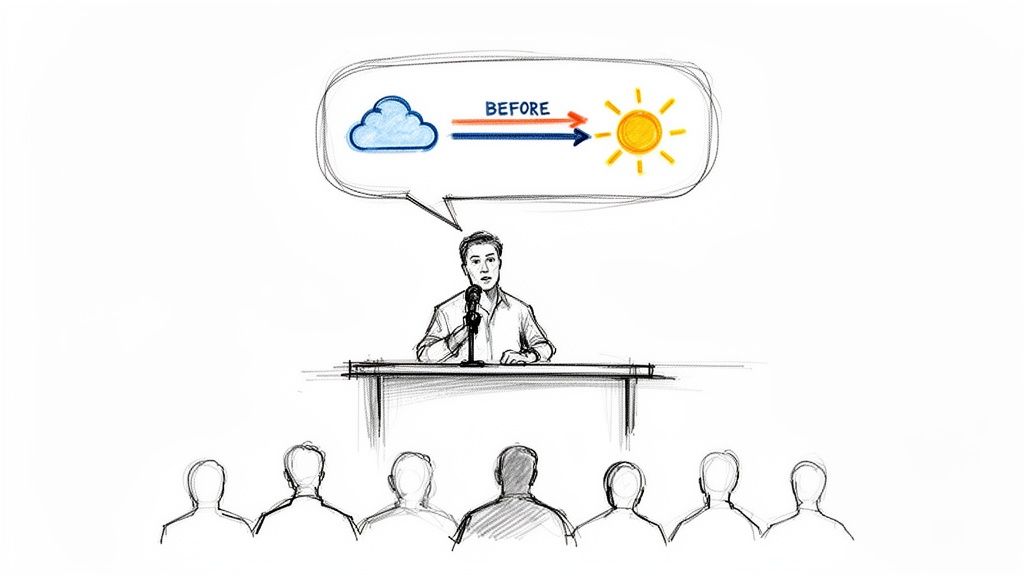
Confidence in selling comes from clarity. When you know exactly what to say—and why it matters to your audience—a stressful sales pitch becomes a helpful conversation.
The biggest mistake creators make is leading with features (modules, worksheets, call schedules). People don't buy features; they buy outcomes. They invest in a solution to a problem that's been keeping them up at night.
Focus on the Before-and-After Story
The most compelling way to communicate value is by telling a simple story of change. This is the narrative that cuts through the noise and shows potential students what’s possible.
For example, instead of saying, “You get five video modules on SEO,” say this: “Go from feeling invisible online to confidently attracting your ideal clients directly from a Google search.”
- The 'Before': Start by describing their current reality. Articulate their struggle better than they can to build an instant bond.
- The 'After': Paint a vivid picture of their future. What will they be able to do, achieve, or feel after your program? Make it tangible and believable.
This before-and-after story is the DNA of all your messaging, from social media posts to webinars.
Crafting Your Core Pitch Elements: A 5-Step Framework
A great pitch isn't a monologue; it’s a structured conversation that guides someone toward a confident "yes."
Here’s a step-by-step example for a course that helps entrepreneurs master public speaking:
- The Hook (Pinpoint the Pain): "Do your hands get clammy just thinking about presenting your business idea? Are you worried that your nerves are costing you customers?"
- The Promise (Introduce the Transformation): "What if you could walk into any room and deliver a pitch that captivates your audience and wins new clients, without the anxiety that’s holding you back?"
- The Proof (Build Credibility): "I helped Sarah, a bakery owner, go from stumbling over her words to landing a $25,000 catering contract from a single presentation."
- The 'How' (Reveal Your Solution): "That’s why I created the 'Confident Speaker' program. It’s a step-by-step system for founders to find their voice and master their message."
- The Call to Action (Make the Ask): "If you're ready to stop hiding and start leading, click here to enroll. Let’s get you on that stage."
This structure follows a logical and emotional journey that makes the final ask feel natural. In fact, confident salespeople achieve 37% higher sales quotas because they build trust more effectively. As you develop the good characteristics of a coach, your skill in guiding people through this narrative will only get stronger.
Pitch Element Breakdown For Maximum Impact
| Pitch Element | Purpose | Example for a Community Course |
|---|---|---|
| The Hook | Grab attention by addressing a known pain point. | "Are you tired of trying to build your online business alone, piecing together advice from a dozen different gurus?" |
| The Promise | Paint a clear picture of the desirable outcome. | "Imagine having a clear roadmap and a supportive network to hit your first $10k month with clarity and confidence." |
| The Proof | Build trust with a specific result or testimonial. | "Last year, our member Jane used this exact framework to triple her client base in just 90 days." |
| The 'How' | Briefly introduce your offer as the vehicle for change. | "That’s why I built the 'Creator's Compass' community—to give you the exact steps and live support you need." |
| The Call to Action | Tell them exactly what to do next. | "Click the 'Join Now' button below to get instant access and start your journey today." |
Fill this out for your offer. Having these five components locked in will make any sales conversation feel more intuitive.
Your most powerful sales tool is a clear story of transformation. Internalize it, believe in it, and share it with conviction. This is the essence of selling with confidence.
Price and Package Your Offers with Conviction
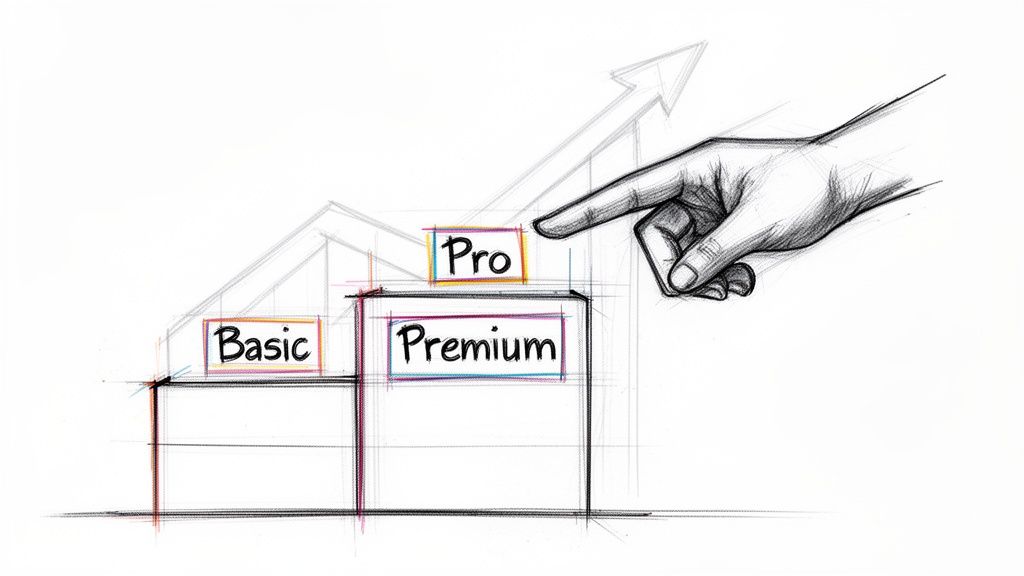
Many creators pour their soul into a brilliant offer, only to underprice it. This is a classic symptom of a confidence dip. To sell confidently, anchor your price to the real-world value you provide, not what feels "comfortable."
Your price should reflect the problems you solve and the results you deliver. When you know your fee is a small investment toward a massive return for your customer, stating the price becomes a simple statement of fact.
Design Tiers That Tell a Story
Tiered pricing meets people where they are. Instead of one take-it-or-leave-it price, you give prospects different options, making the decision to join less intimidating. A three-tier structure works well for most creators:
- The Entry-Level Tier: Offers core content and community access, perfect for newcomers or those on a tighter budget.
- The Mid-Tier (Your Sweet Spot): The most popular option. Includes everything from the entry tier plus extras like live Q&As or exclusive workshops. This should be the best value.
- The Premium Tier: For the person who wants a fast track. Often includes direct access to you through 1:1 coaching or personalized feedback.
This setup shows a clear pathway for growth within your world. To go deeper, check out our guide on building your information product business.
Create Urgency Without Sounding Desperate
Bonuses and limited-time offers are effective for encouraging action, but they must feel like a genuine opportunity, not a sales gimmick.
True urgency comes from scarcity of value, not just scarcity of time. An effective bonus should be so compelling that a prospect would feel like they are missing out by not acting now.
Instead of a random discount, offer a valuable, time-sensitive bonus that complements your main program. For example, a live masterclass with a guest expert or a template bundle that saves members 20 hours of work. This approach is crucial for mastering high-ticket closing, where demonstrating undeniable value is everything.
When you frame offers this way—built on value, structured with clear tiers, and boosted with real urgency—you confidently present a powerful investment in your member’s future.
Handle Objections with Poise and Empathy

An objection isn't a rejection; it's a request for more information or reassurance. A confident seller welcomes objections because they signal that the person is seriously considering the offer. Your job isn't to argue, but to listen, acknowledge their concern, and guide them to a new perspective.
The Feel, Felt, Found Framework: A 3-Step Script
The Feel, Felt, Found framework is a simple, effective method for handling objections without being defensive.
Here's how to use it when someone says, "It’s too expensive":
- Feel: Validate their emotion. "I understand how you feel. Making an investment like this is a big decision." This shows you're on their side.
- Felt: Normalize their concern with a relatable story. "Many of our most successful members felt the exact same way when they first joined." This builds a bridge and shows they aren't alone.
- Found: Pivot to the positive outcome. "But what they found was that after implementing just the first two modules, they landed one new client, which more than covered the entire cost of the program."
This script turns a tense moment into a supportive conversation by focusing on the solution, not the price.
An objection is simply a question you haven't answered yet. Your confidence comes from knowing you have the right answer because you believe in the value you provide.
Turning Price Objections into ROI Conversations
When someone says your offer is "too expensive," it’s almost always about a perceived value gap. They don't yet see how the value outweighs the cost. Your job is to close that gap.
Instead of getting defensive, shift the conversation from cost to investment with a simple question: "That’s a fair point. Could you tell me more about what you're hoping to achieve in the next six months? I want to make sure this is the right investment for you."
This reframes the discussion around their goals. Now you can connect specific parts of your program directly to the results they want, painting a clear picture of the return on their investment. As the growth of online education continues, sellers who can articulate value see their close rates jump by as much as 25%.
When you prepare for common concerns, you build the muscle memory for selling with confidence, turning every objection into a step toward an enthusiastic "yes."
Use Your Tools to Amplify Sales Confidence
Confidence is also about the tools you use. A professional, seamless process projects authority and makes it easy for people to say yes. A clunky sales funnel creates friction and doubt for both you and your potential member. Let your tech do the heavy lifting so you can focus on connecting with people.
Create a Landing Page That Sells for You
Your landing page is your digital handshake. It must communicate value and clarity instantly. A great page builds your confidence because it answers your prospect’s questions before they ask, guiding them logically toward the “buy” button.
A high-converting landing page includes:
- A Killer Headline: Address their biggest pain point or desired outcome.
- A Crystal-Clear Value Prop: State who it’s for, what it does, and what makes it unique.
- Powerful Social Proof: Use testimonials, case studies, or logos to prove others have gotten results.
- A No-Brainer Call to Action: Use a compelling button that tells them exactly what to do next.
Build Desire with Gated Content
Let your product do the talking. Giving potential customers a risk-free taste of your course is a low-pressure way to build trust and desire.
Think of it like a free sample at Costco. You aren't trying to convince someone the food is good; you're letting them taste it. The pressure is off you, and the focus is on the value you're providing.
For example, set up a "teaser" channel inside your Kampunity space that is accessible with a free sign-up. Offer a few introductory lessons or a peek at community discussions. When people experience your content firsthand, the final sales conversation becomes a breeze because they already know you deliver. This strategy pairs perfectly with other top tools for creating online courses that help you build a premium experience.
Use Events to Create High-Energy Moments
A live webinar or launch event concentrates audience excitement into a single, high-impact moment. This allows you to connect with hundreds of people at once, making your sales efforts incredibly efficient.
The goal of a launch webinar isn't just to pitch; it's to deliver tangible value. Spend most of the time teaching something useful that relates directly to your paid program. After you’ve given away fantastic advice for an hour, the invitation to join your program feels like the obvious next step for anyone who wants to go deeper.
Your Top Questions About Confident Selling, Answered
Here are straightforward answers to the most common real-world hurdles creators face when selling.
"How Can I Sell Confidently if I'm an Introvert?"
Confidence isn't about being loud; it’s about being prepared and believing in your offer. For introverts, confidence comes from a deep understanding of your course and a reliable process.
Build systems that play to your strengths. Create a solid script outline so you never feel lost. Think through common objections beforehand. Let well-crafted landing pages and email sequences do the initial talking for you.
Introverts often shine in one-on-one conversations or thoughtful, written communication. Use this to your advantage. Invite people to DM you with questions or host text-based Q&A sessions where you can provide detailed, helpful answers.
"How Do I Handle Imposter Syndrome When Setting My Price?"
Imposter syndrome is about feelings, not facts. Combat it with data. First, research what other courses delivering similar results are charging to get an objective baseline.
More importantly, calculate the return on investment (ROI) you provide. If your program helps someone land a single new client worth $2,000, then a $500 price is a fantastic deal. Anchor your price in the transformation you deliver, not your fluctuating feelings of self-worth. Tiered pricing can also help by letting you offer an accessible entry point while still having a premium package that reflects your full value.
"How Do I Avoid Sounding Salesy or Aggressive?"
Shift your mindset from "convincing" to "guiding." You aren't forcing a product on someone; you are the expert guide leading the right people to a solution they already need.
Use consultative language to change the dynamic:
- Ask great questions to understand their specific goals and challenges.
- Listen more than you talk to show you are invested in their success.
- Position your course as the solution only after you're sure it's the right fit.
A truly confident creator doesn't need to be pushy. They know their offer is valuable. Their only job is to communicate that value clearly and authentically.
"What if No One Buys? How Do I Recover My Confidence?"
A launch that flops is market feedback, not a verdict on your personal worth. It's critical to separate your identity from the results. The thought isn't, "I'm a failure." The thought is, "Okay, that offer didn't connect. Why?"
Treat it as an opportunity to gather intelligence:
- Was the price a major barrier?
- Was the core message unclear?
- Were you talking to the right audience?
A confident creator knows that setbacks are a chance to learn, tweak the offer based on real feedback, and come back for a much stronger relaunch.
Ready to build, grow, and monetize your learning community with confidence? Kampunity provides all the tools you need—from courses and events to payments and landing pages—all in one place. Start building your community for free on Kampunity.